What Is the Helicopter Rescue Scam?
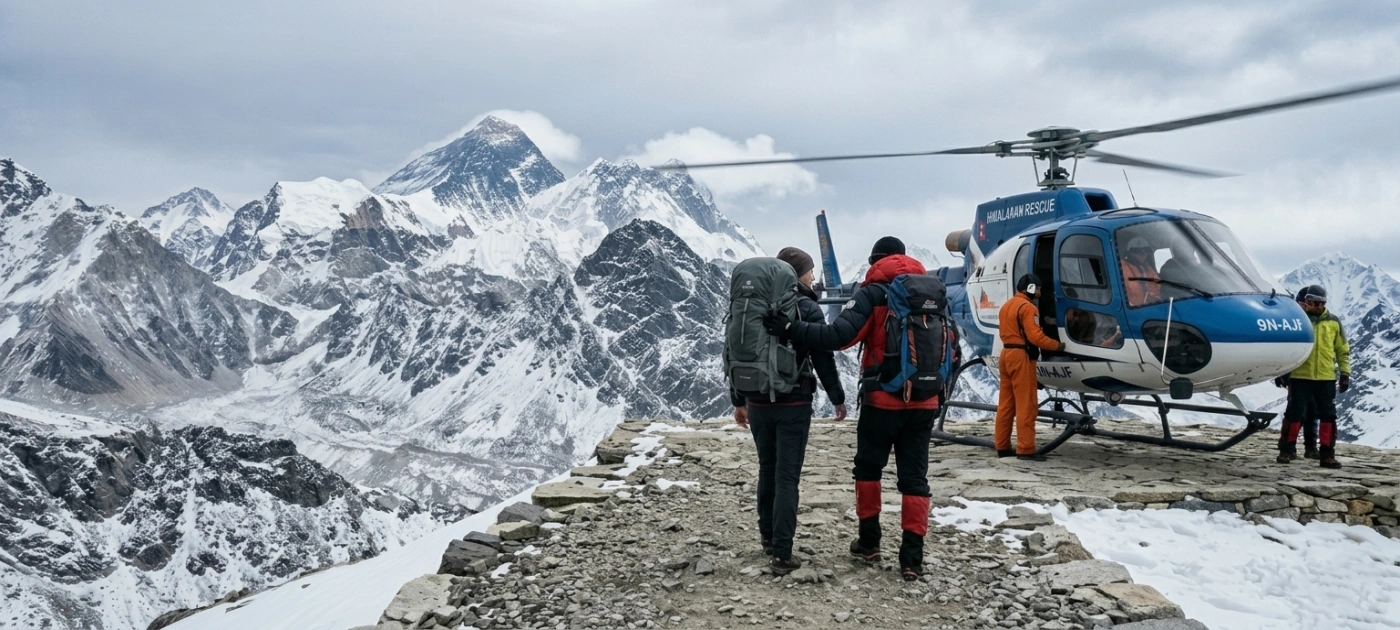
Helicopter rescues in the Himalayas are meant for real emergencies — such as:
- Severe altitude sickness
- Serious injury
- Life-threatening medical conditions
But in some cases, trekkers with mild or manageable symptoms have been pressured into evacuation. The rescue is arranged quickly, and insurance companies are billed large amounts of money.
The problem is not with helicopter rescues themselves — they save many lives every year. The issue is with a small number of unethical operators misusing the system.
How Does the Scam Work?
Here are the common patterns:
1. Exaggerating Symptoms
- A trekker feels mild headache or nausea (common at altitude).
- The guide says, “You have serious altitude sickness. You must evacuate now.”
- The situation is made to sound urgent and dangerous.
2. Creating or Worsening Illness (Rare but Reported)
- In some serious allegations, trekkers were intentionally made sick.
- Substances were reportedly mixed into drinks to cause symptoms.
3. Quick Helicopter Arrangement
- A helicopter is called immediately.
- Cost can range from $3,000 to $10,000 or more.
- The trekker, feeling scared, agrees.
4. Insurance Fraud
- Bills are inflated.
- One shared helicopter flight may be billed as separate private flights.
- Hospitals may add unnecessary treatments to increase the claim.
What Happens to the Trekker?
Best Case
- You are evacuated unnecessarily.
- Insurance pays, but your future premiums may increase.
Worse Case
- Your trek ends early.
- You lose time and money.
- Insurance may question or reject the claim.
Extreme Case
- You are intentionally made sick.
- You face real health risks at high altitude.
What Is Being Done About It?
The Nepal government has taken this issue seriously.
In the recent 2026 crackdown:
- More than 30 people were charged in organized fraud cases.
- Arrests included trekking guides, helicopter operators, and hospital staff.
- Authorities are now:
- Monitoring rescue operations more strictly
- Requiring better medical documentation
- Checking insurance claims more carefully
The goal is to protect trekkers and maintain trust in Nepal’s tourism industry.
How You Can Stay Safe?
Here are simple steps to protect yourself:
- Do not panic over mild altitude symptoms
- Ask for an oxygen saturation (SpO2) check
- Take time to assess symptoms properly
- Ask for a second opinion if evacuation is suggested
- Contact your insurance provider directly
- Choose a reputable and experienced trekking company
Remember: mild headaches and tiredness are common at altitude. Proper acclimatization usually solves the issue.
A Responsible Approach to Trekking
At Asian Adventure Treks & Expedition, with over 25 years of experience in the Himalayas, safety and honesty come first.
We believe:
- Helicopter rescue should only be used in real emergencies
- Proper acclimatization prevents most problems
- Clear communication builds trust
- Ethical practices protect both trekkers and the industry
- We are proud to maintain a clean record with zero fraud cases.
Final Thoughts
The Everest region remains a safe and incredible place to trek. Helicopter rescues save lives every year and are an important part of mountain safety.
With awareness, proper preparation, and a trusted trekking partner, you can enjoy your journey with confidence and peace of mind.
Trek smart. Stay informed. Choose wisely.