Who is the Kumari?
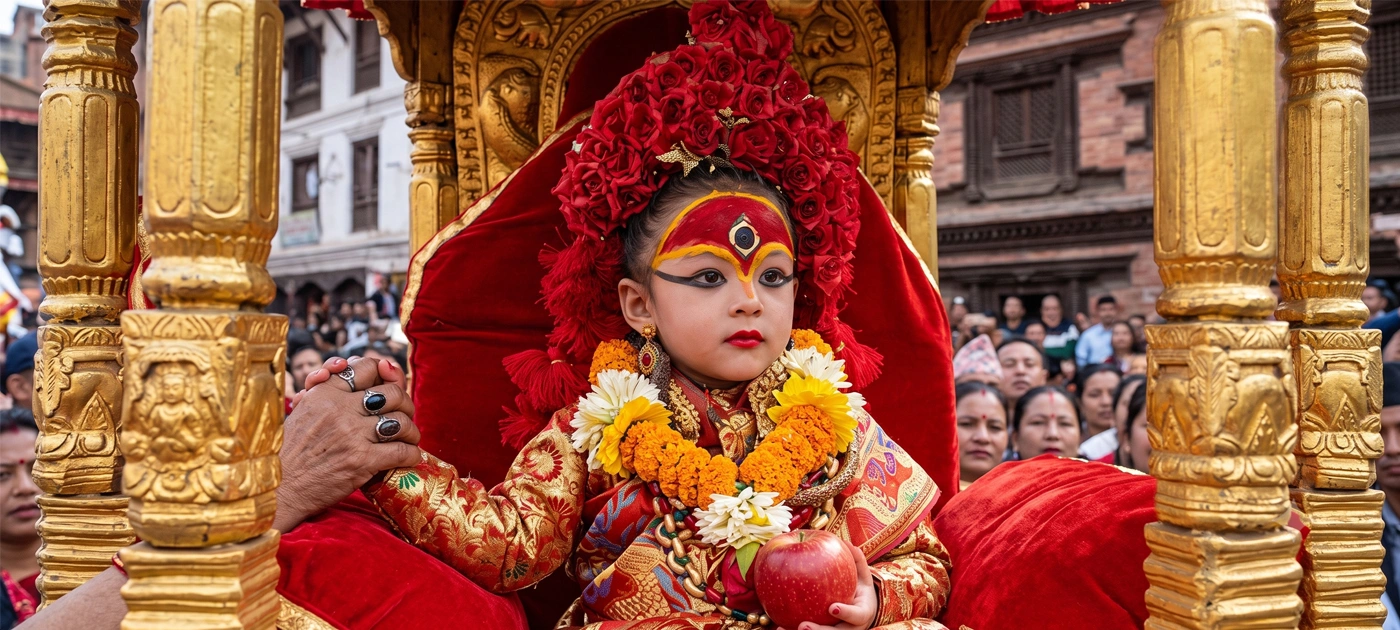
The term Kumari derives from the Sanskrit word Kaumarya, meaning "virgin." In the historic Kathmandu Valley, the Royal Kumari is believed to be the physical earthly manifestation of the powerful Hindu deity Goddess Taleju (a form of Durga).
While Hinduism and Buddhism exist as distinct faiths in many parts of the world, Nepal’s unique cultural tapestry weaves them together. The Kumari is chosen from a Buddhist Newar clan (the Shakya family), yet she is worshipped fervently by both Hindus and Buddhists alike—including Nepal’s former monarchs and current heads of state, who kneel before her for divine blessings.
The 32 Sacred Qualities of Perfection
A Kumari is not born by lineage; she is chosen through a rigorous and secretive selection process when she is just two to four years old. Senior Buddhist priests examine young candidates for 32 distinct physical traits of perfection (Battis Lakshanas).
Some of these ancient requirements include:
- The chest of a lion and thighs of a deer
- Eyelashes like a cow and eyes as clear as dark glass
- A voice as clear and soft as a duck's
- Skin free of blemishes, scars, or birthmarks
- A body shaped like a banyan tree
The Ultimate Test of Fearlessness
Once physical perfection is confirmed, the candidates undergo a final ritual during the autumn festival of Dashain. The young girl is placed in a darkened room decorated with sacrificed buffalo heads and surrounded by masked men performing fierce ritual dances. To be confirmed as the true incarnation of Taleju, the child must remain completely calm, showing no fear.
Life Inside the Kumari Ghar
Once chosen, the child moves into the Kumari Ghar—an 18th-century carved wood and red-brick palace at the edge of Kathmandu Durbar Square. From that day forward, her daily life transforms:
- Her feet must never touch the ground: Outside her palace, she is carried in a golden palanquin or by guardians so her sacred purity remains untouched by the earthly ground.
- Distinct Royal Attire: She wears red silk, her hair is bound in a high topknot, and her eyes are painted with bold, black kajal extending to her temples.
- Quiet Devotion: She receives worshippers and bestows tika (blessings) to devotees, political leaders, and travelers who visit her courtyard.
Traveler’s Etiquette When Visiting the Kumari Ghar
Visitors are welcome to enter the inner courtyard of the Kumari Ghar. On many afternoons, the Living Goddess appears briefly at her carved wooden window to look down at the courtyard. Photography or videography of the Kumari is strictly forbidden by law out of respect for her divine status. When she appears, quiet reverence is expected.
Can Travelers Receive a Private Blessing (Tika)?
While the Kathmandu Valley is home to several Living Goddesses, your experience visiting them depends on which ancient city you explore:
- Kathmandu: Home to the Royal Kumari—the most famous of all. Foreign travelers can see her during her brief courtyard window appearances, but personal blessings upstairs are restricted to high-ranking officials and local devotees.
- Patan: The best choice for travelers seeking an intimate experience. The Patan Kumari welcomes respectful visitors into her home year-round for private audiences and traditional tika blessings.
- Bhaktapur: Home to the Ekanta Kumari, whose blessings are primarily reserved for major local festival days like Dashain or Bisket Jatra.
- Traveler Tip: If receiving a personal tika blessing is on your bucket list, ask your Asian Adventure Treks guide to include a visit to the Patan Kumari in nearby Lalitpur. Her family regularly welcomes respectful foreign travelers into her traditional home for private audiences and divine blessings.
How to arrange it:
- Speak quietly to the caretakers (Chitaidars) standing near the inner entrance.
- Bring a small, respectful offering—usually fresh flowers, sweets/fruits, or a small monetary donation placed inside a envelope/tray for her education and care.
- You will be guided upstairs to her room. You bow before her, and she will silently apply a tika to your forehead. You exit quietly without initiating small talk or taking photos.
Daily Window Viewing (Public Glimpse)
To see her appear at her courtyard window, the caretakers usually open the window during two daily slots:
- Morning Slot: 10:30 AM – 11:30 AM
- Afternoon Slot: 3:30 PM – 4:30 PM(This is generally the best time)
How it works: You enter the central brick courtyard for free. Everyone gathers in absolute silence. She appears at the top central carved window for 30 to 60 seconds, looks silently down at the crowd, and steps back inside.
Note for Travelers: The famous "courtyard window appearance" only happens at the Royal Kumari Ghar in Kathmandu Durbar Square. If you visit Patan, you won't wait in a courtyard; instead, you can walk right upstairs into her room for a face-to-face tika blessing. In Bhaktapur, her blessings are held mainly during local festival days.
The Transition Back to Humanity
Divinity, however, is temporary. The goddess Taleju remains in the girl's body only as long as she remains completely pure.
The moment the Kumari experiences her first menstruation—or loses blood due to a minor cut or scratch—the goddess is believed to leave her body. A grand ceremonial farewell takes place, a new child is chosen, and the former Kumari transitions back into life as a mortal girl.
While ancient myths once suggested it was unlucky to marry an ex-Kumari, modern times have changed. Former Kumaris today receive a monthly government pension, pursue higher education, marry, and lead successful personal and professional lives.
How to Experience Kathmandu’s Sacred Heritage with Asian Adventure Treks
When you book a Himalayan trekking journey with Asian Adventure Treks & Expedition, your adventure doesn't start on the mountain trail—it starts in the ancient, vibrant streets of the Kathmandu Valley.
We always recommend building a dedicated Kathmandu Valley Sightseeing Tour Day into your itinerary. Exploring Durbar Square with one of our experienced local guides gives you deep context into the history, architecture, and living traditions like the Kumari that make Nepal so extraordinarily rich.
Popular Trips Combining Heritage & Trekking:
- Kathmandu City Cultural Tour
- Everest Base Camp Trek with Kathmandu Valley Sightseeing
- Annapurna Circuit & Cultural Heritage Combo
Ready to Explore the Wonders of Nepal?
Whether you're looking to stand before ancient living traditions or trek beneath the world's highest peaks, Asian Adventure Treks & Expedition is here to craft your trip of a lifetime.
👉Contact Our Travel Experts Today to customize your Nepal itinerary or book your Kathmandu day tour!