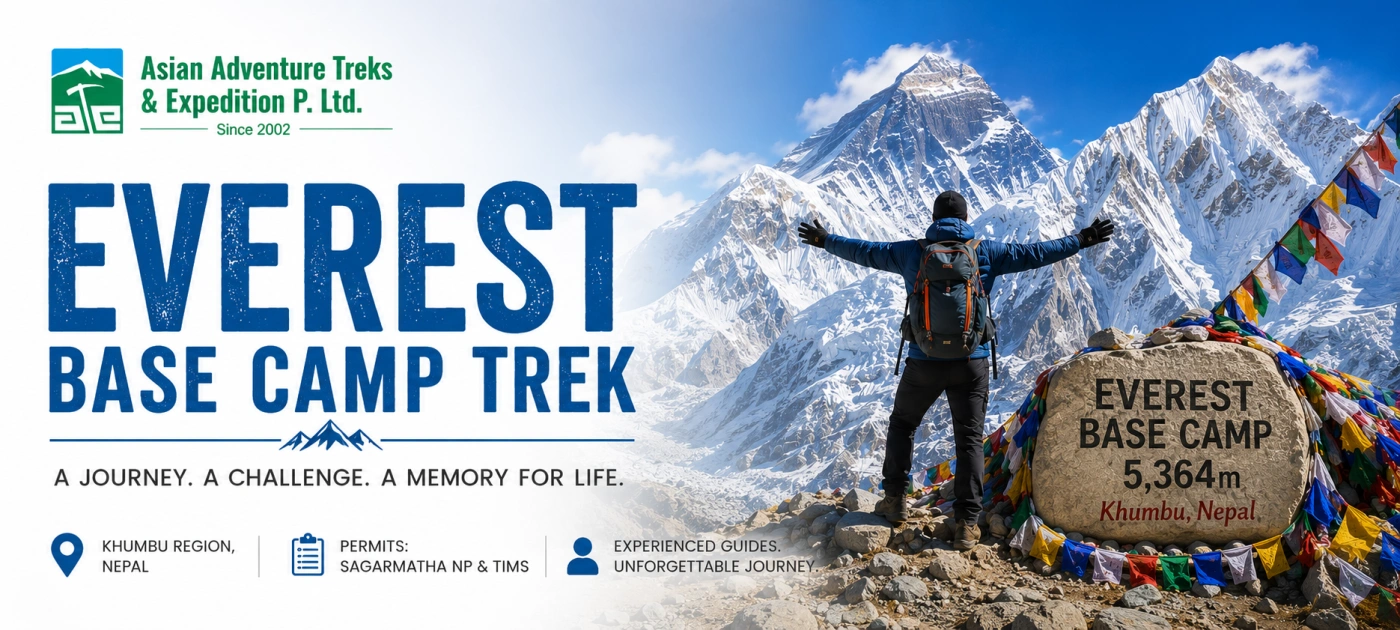
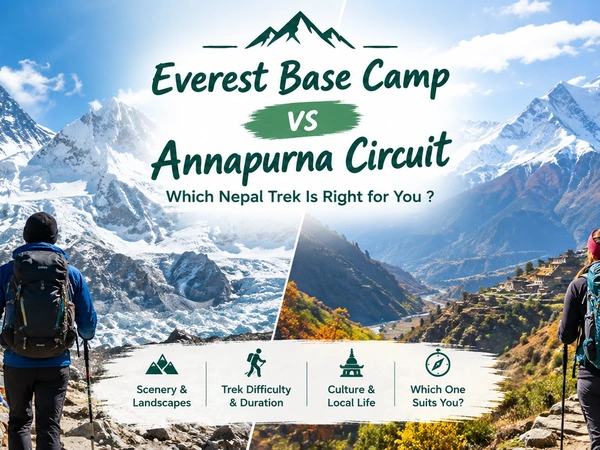
Standing at the foot of the world's highest mountain is a dream shared by thousands of adventure travellers. The Everest Base Camp Trek (EBC Trek) is one of the world's most iconic trekking journeys, offering breathtaking Himalayan scenery, rich Sherpa culture, ancient monasteries, and unforgettable experiences in the heart of the Khumbu region.
Whether you're planning your first Himalayan trek or returning for another adventure, this guide covers everything you need to know about trekking to Everest Base Camp in 2026 and 2027. From costs and itineraries to permits, accommodation, altitude sickness, Lukla flights, and the best trekking seasons, this guide provides practical information to help you prepare.
Where is Everest Base Camp?
Everest Base Camp is located in the Khumbu region of northeastern Nepal, inside Sagarmatha National Park, a UNESCO World Heritage Site. The trek begins with a thrilling flight from Kathmandu (or Ramechhap during peak seasons) to Lukla, the gateway to the Everest region.
From Lukla, trekkers follow the Dudh Koshi River through picturesque Sherpa villages before gradually ascending into the alpine landscapes surrounding Mount Everest.
Distance
- Kathmandu to Lukla (Flight): Approximately 35 minutes
- Lukla to Everest Base Camp (Walking): About 65 km (one way)
- Total Trek Distance (Round Trip): Approximately 130 km
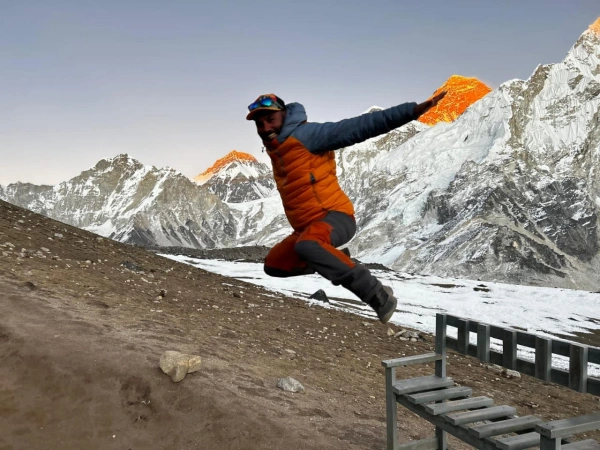
Everest Base Camp Trek is Nepal's most famous trekking adventure. The trek to Everest Base Camp combines stunning Himalayan landscapes with authentic Sherpa culture. Along the way, you'll pass traditional villages such as Namche Bazaar, Tengboche, Dingboche, Lobuche, and Gorakshep, while enjoying panoramic views of Everest, Lhotse, Nuptse, Ama Dablam, Pumori, Thamserku, and many other snow-capped peaks. During the trek, best panoramic view of Mount Everest can see seen from the highest point of trek, Kala Patthar (5545 m) where trekkers enjoy an unforgettable sunrise over the Himalayas.
Unlike climbing Everest itself, trekking to Everest Base Camp requires no technical climbing experience. With proper acclimatization, preparation, and guidance, many healthy and reasonably fit travellers successfully complete this remarkable adventure each year.
Everest Information
|
Information
|
Details
|
|
Height
|
8,848.86 meters
|
|
Country
|
Nepal
|
|
Nepal Name
|
Sagarmatha
|
|
Tibetan Name
|
Chomolungma
|
|
First Successful Ascent
|
29 May 1953
|
|
Climbers
|
Sir Edmund Hillary & Tenzing Norgay Sherpa
|
|
Base Camp Elevation
|
5,364 m
|
|
Kala Patthar
|
5,545 m (Highest point of EBC trek)
|
Today, thousands of trekkers visit Everest Base Camp every year to experience the beauty of the Himalayas without attempting the technical climb to the summit.
Best Time to Visit the Everest Region
The best time for the Everest Base Camp Trek is during the Spring (March to May) & Autumn (September to November), when the weather is generally stable, skies are clear, and mountain views are at their finest. Then after Winter (Dec – Jan) is also favourable for winter trekking in Everest Region of Nepal.
Each season provides a unique trekking experience, so the ideal time depends on your preferences for weather, scenery, and crowd levels.
|
Season
|
Months
|
Weather & Trail Conditions
|
Highlights
|
Challenges
|
Best For
|
|
1. Spring (Best Season)
|
March – May
|
Stable weather, clear skies, comfortable temperatures, blooming forests
|
- Crystal-clear mountain views
- Rhododendron blooms
- Everest expedition season
- Excellent photography
- Comfortable trekking conditions
|
• Popular season with busy trails and tea houses
|
First-time trekkers, photographers, and anyone seeking the best overall trekking experience
|
|
2. Autumn (Peak Trekking Season)
|
September – November
|
Dry weather, stable conditions, exceptional visibility
|
- Best mountain views
- Comfortable temperatures
- Dry trekking trails
- Dashain & Tihar festivals
- Excellent photography
|
• Peak trekking season with crowded trails and tea houses
|
Suitable for all trekkers looking for the finest weather and panoramic Himalayan scenery
|
|
3. Winter
|
December – February
|
Cold but generally clear weather, snow-covered landscapes
|
- Quiet trails
- Spectacular snowy scenery
- Clear mountain views
|
• Cold nights
• Heavy snowfall at higher elevations
|
Experienced trekkers prepared for cold conditions and seeking solitude
|
|
4. Summer / Monsoon
|
June – August
|
Warm with rainfall at lower elevations, greener landscapes, occasional cloudy skies
|
- Fewer trekkers
- Lush green scenery
- Peaceful trails
- Lower accommodation costs
|
• Limited mountain views
• Lukla flight delays or cancellations
|
Experienced trekkers who prefer quiet trails and flexible travel schedules
|
Difficulty of Everest Base Camp Trek
Everest Base Camp Trek is generally rated as Moderate (3/5). It does not require technical climbing skills, but it does demand good physical fitness, mental determination, and proper acclimatization.
Trekkers walk for 5–6 hours each day over varied terrain while gaining altitude gradually. The biggest challenge is not the distance but the reduced oxygen levels at higher elevations.
Whereas there is another popular travel options to Everest Base Camp via Gokyo and Cho La Pass Trek whcih is more demanding; graded HARD than short trekking to EBC route. This trek is recommended for experienced trekkers or adventurous hikers with good fitness who want to explore both Everest Base Camp and the stunning Gokyo Lakes.
Sample Itinerary of Everest Base Camp Trekking (12 Days)
|
Day
|
Itinerary
|
Elevation
|
|
01
|
Fly from Kathmandu Lukla (2860 m), trek to Phakding
|
2,610 m
|
|
02
|
Trek to Namche Bazaar
|
3,440 m
|
|
03
|
Acclimatization day with hike to Hotel Everest View
|
3,440 m
|
|
04
|
Trek to Tengboche
|
3,860 m
|
|
05
|
Trek to Dingboche
|
4,410 m
|
|
06
|
Acclimatization hike to Nangkartshang Peak
|
4,410 m
|
|
07
|
Trek to Lobuche
|
4,910 m
|
|
08
|
Trek to Gorakshep,
Visit Everest Base Camp (5364 m), return to Gorakshep
|
5,164 m
|
|
09
|
Sunrise hike to Kala Patthar (5545 m), trek to Dingboche
|
4,410 m
|
|
10
|
Trek to Namche Bazaar
|
3,440 m
|
|
11
|
Trek to Lukla
|
2,860 m
|
|
12
|
Fly back to Kathmandu
|
1,350 m
|
This itinerary includes two essential acclimatization days, helping reduce the risk of altitude sickness while maximizing your chances of completing the trek safely and comfortably.
Permits Required for Everest Trekking
Every trekker visiting the Everest region must obtain the required trekking permits before entering the Khumbu region. Since 2018, the traditional TIMS Card is no longer required for the standard Everest Base Camp Trek.
1. Sagarmatha National Park Entry Permit
2. Khumbu Pasang Lhamu Rural Municipality Permit
When you book with Asian Adventure Treks & Expedition, we arrange all the required trekking permits before your trek begins, allowing you to focus on enjoying your adventure.
Accommodation During the Everest Base Camp Trek
Accommodation on the Everest Base Camp Trek is provided in traditional mountain tea houses (lodges). These family-run lodges offer a warm and welcoming place to rest after each day's trek.
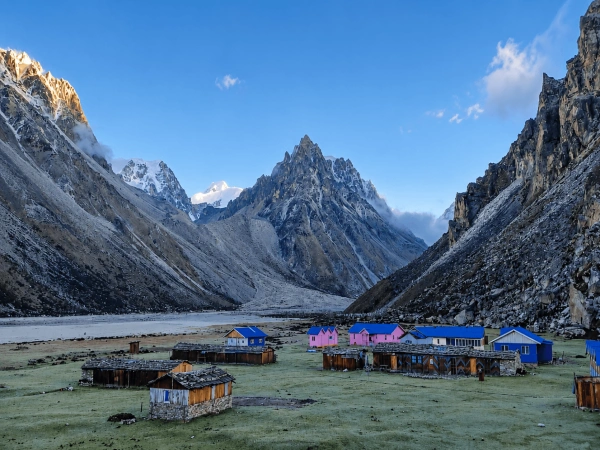
Tea houses are available in every village along the route, including Lukla, Phakding, Namche Bazaar, Tengboche, Dingboche, Lobuche, and Gorakshep.
Standard Rooms (twin sharing rooms) with pillows, blankets are available with limited availability of some attached bathroom. For dining, you will dine in heated dining room.Rooms become more basic as you gain altitude, especially above Dingboche.
Facilities Available during Everest Trekking
Depending on the village and altitude, tea houses may offer:
- Hot showers (additional charge)
- Wi-Fi internet (additional charge)
- Device charging facilities (additional charge)
- Laundry services (lower elevations)
- Bakery cafés in Namche Bazaar
Luxury Accommodation Availability during EBC Trek
If you prefer more comfort, luxury lodges during Everest Trekking, they are available in places such as:
- Lukla
- Phakding
- Monjo
- Namche Bazaar
- Deboche
Luxury lodges may include:
- Private attached bathrooms
- Heated bedrooms
- Electric blankets
- High-quality meals
- Comfortable lounges
- Premium hospitality
Asian Adventure Treks & Expedition also offers Luxury Everest Base Camp Trek packages with upgraded accommodation wherever available.
Food During the Everest Base Camp Trek
One of the pleasant surprises of trekking in the Everest region is the wide variety of food available in tea houses. Most lodges offer freshly prepared meals using locally sourced and transported ingredients.
A typical trekking package includes three meals per day (breakfast, lunch, and dinner).
Why is Dal Bhat Popular during treks in Nepal?
Dal Bhat is often called the "trekker's fuel" because it provides balanced nutrition and unlimited refills at many tea houses. It supplies carbohydrates, protein, and vegetables, making it an excellent meal for long trekking days.
Drinking Water on the Everest Base Camp Trek
Staying hydrated is essential during high-altitude trekking. Most trekkers should drink 3–4 liters of water per day to help reduce the risk of dehydration and altitude sickness.
There are several safe options for obtaining drinking water along the trail.
1. Boiled Water (Recommended)
Tea houses provide boiled drinking water for a small fee. This is one of the safest and most environmentally friendly options.
2. Purified Tap Water
Natural water sources are available throughout the region, but untreated water should never be consumed directly.
You can safely use:
- Water purification tablets
- Steripen (UV purifier)
- Portable water filters
3. Bottled Water
Bottled mineral water is available in most villages, but it becomes increasingly expensive at higher elevations due to transportation costs. Plastic waste is also a concern, so reusable bottles are strongly encouraged.
For an eco-friendly and cost-effective trek, carry a reusable water bottle or hydration bladder and refill it with boiled water from tea houses or treat local water using purification tablets or a filtration system. This helps reduce plastic waste while ensuring you stay well hydrated throughout your Everest Base Camp adventure.
Internet & Charging in the Everest Region
Although the Everest region is remote, internet and charging facilities are available in most villages along the trekking route. However, services become more limited and expensive as you gain altitude.
Wi-Fi Availability
Many tea houses offer paid Wi-Fi access through local providers such as Everest Link. Internet speed is generally sufficient for messaging, emails, and light browsing but may not support video calls or large file uploads, especially at higher elevations.
Mobile Network
Two major mobile operators provide coverage in parts of the Everest region:
- Nepal Telecom (NTC): Offers the widest coverage and is generally the most reliable option for trekkers.
Coverage is usually good from Lukla to Namche Bazaar, while signals become weaker and less consistent above Dingboche.
Charging Electronic Devices
Most tea houses allow you to charge phones, cameras, power banks, and other electronic devices for an additional fee.
Useful Tips for EBC Trek
- Carry a 20,000–30,000 mAh power bank.
- Bring spare camera batteries.
- Keep batteries warm during cold nights, as low temperatures reduce battery performance.
- Consider a lightweight solar charger for extended treks.
Lukla Flights Information for Everest Trekking
The journey to Everest Base Camp begins with a scenic mountain flight to Tenzing-Hillary Airport, Lukla (2,860 m). This airport is renowned as one of the world's most exciting mountain airports due to its short runway and spectacular Himalayan setting.
Flight Duration
- Kathmandu – Lukla: Approximately 35 minutes
- Ramechhap – Lukla: Approximately 20 minutes
During the busy spring (March–May) and autumn (September–November) trekking seasons, most Lukla flights operate from Ramechhap Airport (Manthali) to reduce air traffic congestion at Kathmandu's Tribhuvan International Airport.
Travelers flying from Ramechhap usually leave Kathmandu around 2:00–3:00 AM for the 4–5-hour drive to Manthali before boarding the morning flight to Lukla.
Altitude Sickness on the Everest Base Camp Trek and How to Prevent It
Altitude sickness, also known as Acute Mountain Sickness (AMS), is one of the most important challenges trekkers face in the Everest region. As you ascend above 2,500 meters, the oxygen level decreases, making it harder for your body to adapt. While anyone can develop altitude sickness regardless of age or fitness level, proper acclimatization and a gradual ascent significantly reduce the risk.
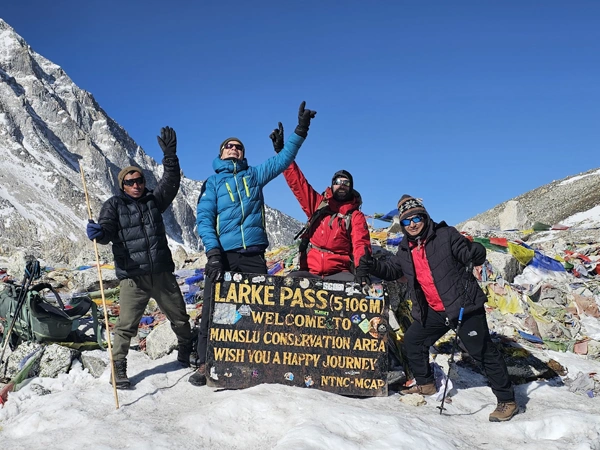
The Everest Base Camp Trek reaches 5,364 meters, while Kala Patthar (5,545 meters) is the highest point of the journey. On the Everest Base Camp with Gokyo Cho La Pass Trek, you also cross Cho La Pass (5,420 meters), making acclimatization even more important.
Common Symptoms of Altitude Sickness
Watch for the following early signs of AMS:
- Headache
- Loss of appetite
- Nausea or vomiting
- Dizziness
- Fatigue or unusual tiredness
- Difficulty sleeping
- Shortness of breath while resting
If symptoms become severe, they can develop into High Altitude Pulmonary Edema (HAPE) or High Altitude Cerebral Edema (HACE), both of which require immediate descent and medical attention.
How to Prevent Altitude Sickness
The best way to prevent AMS is to give your body enough time to adjust to the altitude.
Prevention Tips
- Follow a well-planned itinerary with two acclimatization days.
- Walk slowly and maintain a comfortable pace.
- Drink 3–4 liters of water every day.
- Eat nutritious meals and avoid skipping meals.
- Avoid alcohol and smoking during the trek.
- Sleep well and avoid overexertion.
- Inform your guide immediately if you experience symptoms.
- Consult your doctor about medications such as Acetazolamide (Diamox) before your trip.
At Asian Adventure Treks & Expedition, our experienced guides are trained to recognize the early signs of altitude sickness and carry a comprehensive first-aid kit. Your safety is always our highest priority.
Travel Insurance Requirement for Everest Base Camp Trek
Travel insurance is mandatory for trekking in the Everest region. Due to the remote mountain environment, medical treatment and emergency evacuation can be expensive. Comprehensive travel insurance provides financial protection and peace of mind throughout your adventure.
Your travel insurance should cover: Emergency helicopter evacuation, high-altitude trekking (up to 6,000 m), emergency medical treatment, hospitalization, accidental injury, trip cancellation or interruption, flight delays or cancellations, and lost or delayed baggage.
Why is Helicopter Coverage Important?
In the event of severe altitude sickness, injury, or illness, helicopters are often the only practical way to evacuate a trekker from the Everest region. Without insurance, evacuation costs can range from USD 4,000 to USD 8,000 or more, depending on the location and weather conditions.
Before purchasing a policy, confirm that it specifically covers high-altitude trekking in Nepal and includes helicopter rescue.
Solo vs Guided Trek to Everest Base Camp
Many travellers ask whether they should trek independently or join a guided trek. While both options have advantages, a guided trek offers greater safety, convenience, and local insight.
|
Solo Trek
|
Guided Trek
|
|
Advantages
|
Advantages
|
|
✔ Flexible itinerary
|
✔ Experienced licensed guide
|
|
✔ Trek at your own pace
|
✔ Porter support
|
|
✔ Independent travel experience
|
✔ Better acclimatization planning
|
| |
✔ Assistance with permits and logistics
|
| |
✔ Cultural insights and local knowledge
|
| |
✔ Immediate help during emergencies
|
| |
✔ Greater safety at high altitude
|
For first-time visitors to Nepal and anyone trekking at high altitude, we strongly recommend choosing a guided Everest Base Camp Trek. An experienced guide enhances your safety, enriches your cultural experience, and allows you to focus on enjoying the journey rather than worrying about logistics.
Are there Options for a Luxury Everest Base Camp Trek?
Yes. Travelers seeking extra comfort can choose a Luxury Everest Base Camp Trek, which combines the adventure of trekking with premium accommodation and upgraded services.
Luxury trekking is ideal for honeymooners, families, senior travelers, photographers, and anyone who prefers a higher level of comfort while exploring the Himalayas.
Features of Luxury Trekking for Everest Base Camp Trek
- Luxury hotels in Kathmandu
- Premium mountain lodges where available
- Private airport transfers
- Experienced English-speaking guide
- Comfortable twin or private rooms
- Attached bathrooms in selected lodges
- High-quality meals
- Flexible itinerary
- Emergency support throughout the trek
Some luxury packages is also inclusive of helicopter return from Gorakshep or Everest Base Camp, allowing trekkers to enjoy breathtaking aerial views of the Himalayas while reducing the trekking duration.
Asian Adventure Treks & Expedition – Best Trekking Agency in Nepal for EBC trek
The Everest Base Camp Trek is more than a trek—it's a journey through the heart of the Himalayas, where breathtaking landscapes, Sherpa hospitality, and the world's highest peaks create an unforgettable experience.
Whether you choose the classic Everest Base Camp Trek, the adventurous Everest Base Camp Trek with Gokyo Cho La Pass or the challenging Everest Three Passes Trek, our experienced team is here to make your Himalayan dream a reality.
Contact Asian Adventure Treks & Expedition today to start planning your Everest Base Camp Trek for 2026 or 2027. From your arrival in Kathmandu to your final departure, we'll take care of every detail so you can focus on enjoying one of the world's greatest trekking adventures.