Where is Kanchenjunga?
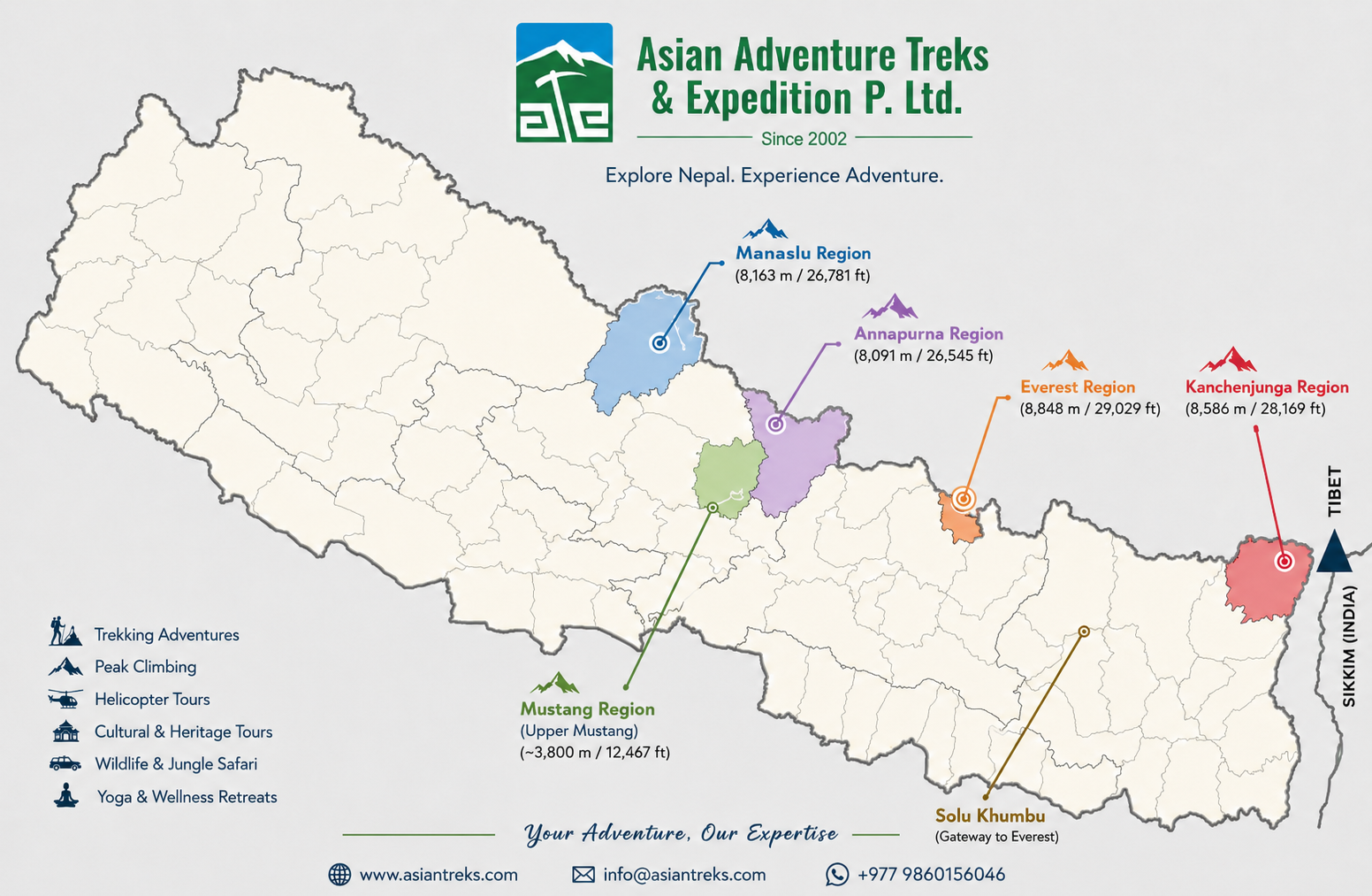
Kanchenjunga lies in eastern Nepal along the border with India (Sikkim). The trekking to Kanchenjunga region passes through the Kanchenjunga Conservation Area (KCA), one of Nepal's richest biodiversity regions and a remote protected region covering 2035 square km. Established in 1997, the conservation area is one of Nepal's largest and most biologically diverse protected landscapes, stretching from subtropical forests to glaciers and high alpine terrain.
The Kanchenjunga Conservation Area is home to an incredible variety of wildlife and plant species, including:
- Snow Leopards
- Red Pandas
- Himalayan Black Bears
- Musk Deer
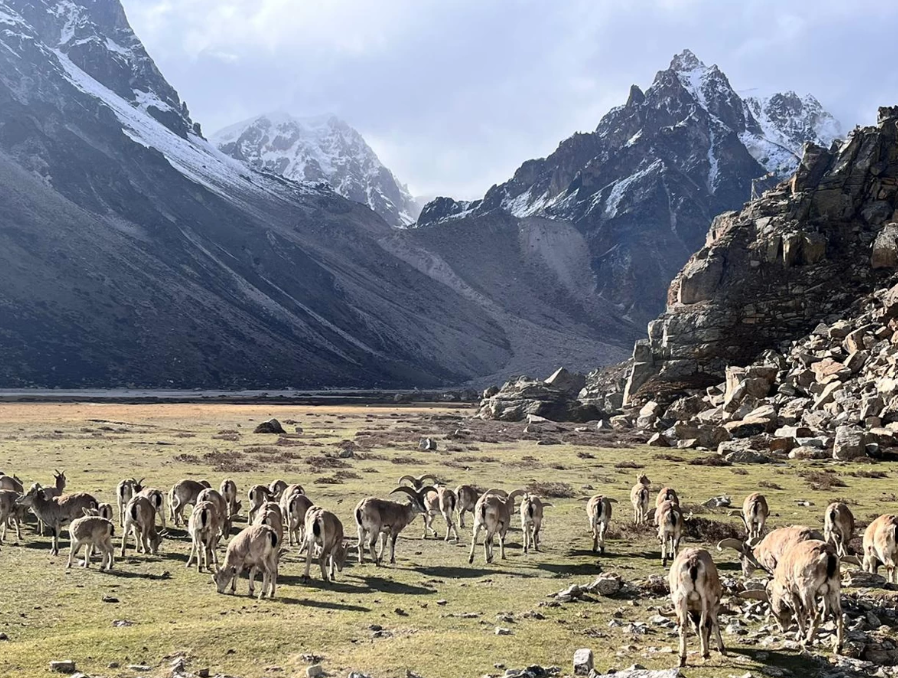
- Himalayan Blue Sheep (Bharal)
- Hundreds of bird species (over 250 species)
- Rhododendron forests
- Alpine landscapes
- Glaciers & pristine mountain ladnscapes along with the home to third highest mountain in the world - Kanchenjunga
Kanchenjunga region is one of the Nepal’s best preserved wilderness areas, and trekking here is the chance to experience untouched nature, along with culture and people residing in this region like: traditional Rai, Limbu, Sherpa, and Tibetan cultures.
The below mentioned are the basic facts about Kanchenjunga Trekking in Nepal:
|
Trek Information
|
Details
|
|
Trek Duration
|
20-22 Days (Arrival – Departure)
|
|
Maximum Elevation
|
Pangpema (North Base Camp) – 5,143 meters
|
|
Trek Difficulty
|
Hard
|
|
Best Seasons
|
Spring (March–May) & Autumn (September–November)
|
|
Accommodation
|
Tea Houses & Local Lodges
|
|
Starting Point
|
Trekking: Drive from Taplejung – Sekathum and begin trek
|
|
Ending Point
|
Drive back to Taplejung after trekking upto Hellok
|
|
Trek Region
|
Eastern Nepal
|
|
Permits Required
|
Restricted Area Permit (RAP) & Kanchenjunga Conservation Area Permit (KCAP)
|
|
Guide Required
|
Yes (Mandatory)
|
|
Minimum person
|
01 +
|
|
Combination of
|
Kanchenjunga South Base Camp Trek + Kanchenjunga North Base Camp Trek
|
Travelers with limited vacation time can still experience the beauty of the Kanchenjunga region by choosing a shorter trekking itinerary. The Kanchenjunga South Base Camp Trek (12–14 days) and the Kanchenjunga North Base Camp Trek (15–17 days) are excellent options, allowing trekkers to explore this remote Himalayan wilderness within a shorter timeframe. Among these, the Kanchenjunga North Base Camp Trek is the most popular choice, offering spectacular views of Mount Kanchenjunga (8,586 m), diverse landscapes, traditional Rai and Limbu villages, and an unforgettable trekking experience in eastern Nepal.
Kanchenjunga Circuit Trek Itinerary (18 Days)
Below is a popular itinerary for Kanchenjunga Circuit Trekking excluding 3 days in Kathmandu.
|
Day
|
Itinerary
|
Elevation
|
Overnight
|
|
Day 01
|
Fly from Kathmandu to Bhadrapur and drive to Taplejung
|
1,820 m / 5,971 ft
|
Lodge
|
|
Day 02
|
Trek from Taplejung to Sekathum
|
1,585 m / 5,200 ft
|
Lodge
|
|
Day 03
|
Trek from Sekathum to Amjilasa
|
2,395 m / 7,857 ft
|
Lodge
|
|
Day 04
|
Trek from Amjilasa to Gyabla
|
2,730 m / 8,956 ft
|
Lodge
|
|
Day 05
|
Trek from Gyabla to Ghunsa
|
3,427 m / 11,243 ft
|
Lodge
|
|
Day 06
|
Trek from Ghunsa to Khambachen
|
4,050 m / 13,287 ft
|
Lodge
|
|
Day 07
|
Acclimatization day in Khambachen with a short hike
|
4,100 m / 13,451 ft
|
Lodge
|
|
Day 08
|
Trek from Khambachen to Lhonak
|
4,780 m / 15,682 ft
|
Lodge
|
|
Day 09
|
Hike to Kanchenjunga North Base Camp (Pangpema) and return to Lhonak
|
5,143 m / 16,873 ft
|
Lodge
|
|
Day 10
|
Trek from Lhonak via Khambachen to Ghunsa
|
3,427 m / 11,243 ft
|
Lodge
|
|
Day 11
|
Trek from Ghunsa to Selele Phedi
|
4,000 m / 13,123 ft
|
Lodge
|
|
Day 12
|
Cross Selele La Pass (4,480 m) and descend to Tseram
|
3,870 m / 12,697 ft
|
Lodge
|
|
Day 13
|
Trek from Tseram to Ramche
|
4,580 m / 15,026 ft
|
Lodge
|
|
Day 14
|
Hike to Yalung (Kanchenjunga South) Base Camp and return to Ramche
|
4,500 m / 14,763 ft
|
Lodge
|
|
Day 15
|
Trek from Ramche to Tortong
|
2,995 m / 9,826 ft
|
Lodge
|
|
Day 16
|
Trek from Tortong to Kyansar (Yasang)
|
1,700 m / 5,577 ft
|
Lodge
|
|
Day 17
|
Trek via Hellok to Taplejung & drive to Ilam
|
1,200 m / 3,937 ft(Ilam)
|
Lodge
|
|
Day 18
|
Drive to Bhadrapur, fly back to Kathmandu
|
1,350 m / 4,429 ft
|
Hotel
|
The above mentioned itinerary is tailor made itinerary of Kanchenjunga Circuit Trekking, and can be customized as per the interest of clients, the trekking can be extended as well as shorten with alternative trek options to Kanchenjunga trekking. The packages and group joining options are also available for Kanchenjunga Trekking with Asian Adventure Treks & Expedition.
Why Choose Kanchenjunga Circuit Trek?
Unlike Nepal's more popular trekking destinations, Kanchenjunga Circuit remains wonderfully untouched. It offers an opportunity to experience genuine Himalayan wilderness while passing through traditional villages where life has changed little over generations.
Being one of the restricted trekking regions of Nepal, Kanchenjunga Trekking offers an authentic Himalayan experience far from the busy trails like Everest and Annapurna. The trek takes you through pristine forests, remote mountain villages, high alpine meadows, and dramatic glaciers while circling the world's third-highest mountain, Mt. Kanchenjunga (8586 m).
Highlights of Kanchenjunga Circuit Trekking
- Stand at Kanchenjunga North Base Camp (Pangpema – 5143 m) and witness jaw-dropping views of Mount Kanchenjunga
- Mesmerizing views of south face of Kanchenjunga and Yalung Kang (8505 m), Khambachen Peak (7903 m), Khambachen South (7532 m) and surrounding peaks from the view point.
- Enjoy breathtaking views of Mt. Kanchenjunga (8,586 m), the third-highest mountain in the world.
- Trek through one of Nepal's most remote and unspoiled Himalayan regions.
- Explore the Kanchenjunga Conservation Area, home to diverse flora and fauna.
- Walk through lush rhododendron forests, bamboo groves, alpine meadows, and glacial valleys.
- Experience the warm hospitality and unique traditions of Limbu, Rai, Sherpa, and Tibetan-influenced communities in rural eastern Nepal.
- Cross three different high Himalayan passes above 4000 meters: Sele La (4290 m), Sinion La (4440 m) & Mirgin Pass (4480 m)
- Witness magnificent glaciers, towering peaks, waterfalls, and pristine mountain rivers.
- Spot rare Himalayan wildlife such as red pandas, Himalayan black bears, blue sheep, musk deer, and, with exceptional luck, the elusive snow leopard.
- Stay in traditional local tea houses and enjoy genuine Himalayan hospitality.
- Perfect for experienced trekkers seeking adventure, solitude, and untouched mountain landscapes.
- Less crowded as compared to Everest and Annapurna regions, providing a peaceful wilderness experience.
Moreover, trekkers will have the unique opportunity to visit both the North Base Camp (Pangpema) and the South Base Camp (Oktang/Yalung Base Camp) in a single journey, making it one of Nepal's most diverse and complete trekking experiences. Along the way, you'll experience the rich cultures of the Rai, Limbu, Sherpa, and Tibetan communities, whose traditions have remained unchanged for generations.
How Many Days are required for Kanchenjunga Trekking in Nepal?
Most trekkers need 22–24 days to complete the full Kanchenjunga Circuit Trek or Kanchenjunga Base Camp Trekking in Nepal. However since there are 2 sides of Kanchenjunga trek like: South Base Camp & North Base Camp of Kanchenjunga Circuit trek, below are the days required for Kanchenjunga Treks:
Typical durations include:
|
Kanchenjunga Trek
|
Days Required + Kathmandu
|
|
Kanchenjunga South Base Camp Trek
|
10 days trekking + 4 days in Kathmandu = 14 days
|
|
Kanchenjunga North Base Camp Trek
|
13 days trekking + 4 days in Kathmandu = 17 days
|
|
Kanchenjunga Circuit Trek
|
18 days trekking + 4 days in Kathmandu = 22 days
|
|
Kanchenjunga Photography or cultural exploration
|
25 days +
|
How Difficult is Kanchenjunga Circuit Trek?
Kanchenjunga Circuit Trek is graded as HARD trek and is best suited for experienced trekkers or physically fit adventurers prepared for long days in the mountains. The trek reaches a maximum altitude of 5143 meters (Kanchenjunga North Base Camp) and crosses Sele La Pass (4480 m), making proper acclimatization essential.
Factors That Make the Kanchenjunga Trek "HARD"
- Long trekking days of 6–8 hours, with some days lasting up to 9 hours.
- The trail covers approximately 220 to 250 kilometers (137 to 155 miles) with High altitude, reaching 5,143 m, where the risk of altitude sickness increases.
- Remote location with limited medical facilities and basic tea house accommodation.
- Steep ascents and descents across rugged mountain terrain.
- Long trek duration, typically 18-20 days, requiring good stamina and endurance.
- Unpredictable mountain weather, especially at higher elevations.
- Limited communication and transportation, making the trek more adventurous than other popular routes.
- Crossing three different high Himalayan passes above 4000 meters like: Sele La (4290 m), Sinion La (4440 m) & Mirgin Pass (4480 m)
Unlike the more popular trekking routes in Nepal, the Kanchenjunga Circuit Trek has very few exit points and limited infrastructure once you enter the remote mountain region. This means you'll need to complete the planned itinerary, as alternative routes and transportation options are scarce. For this reason, good physical fitness, mental resilience, and proper preparation are essential. With the support of an experienced guide and a well-paced itinerary that includes acclimatization days, trekkers can safely enjoy one of Nepal's most rewarding and untouched Himalayan adventures. However, the reward is an unforgettable journey through pristine Himalayan wilderness with very few trekkers.
Who Can Do Kanchenjunga Trek?
The Kanchenjunga Circuit Trek is ideal for trekkers who:
- Have previous multi-day trekking experience in the Himalayas or similar mountain regions.
- Maintain a good level of physical fitness and endurance.
- Are comfortable walking for several consecutive days at high altitude.
- Prefer remote trails and authentic wilderness experiences over crowded trekking routes.
With proper preparation, gradual acclimatization, and an experienced guide, the Kanchenjunga Circuit Trek is a safe, rewarding, and once-in-a-lifetime adventure through one of Nepal's most spectacular and untouched mountain regions.
Can Beginners Do the Kanchenjunga Circuit Trek?
Yes, beginners can complete the Kanchenjunga Circuit Trek, but it is not recommended for first-time trekkers with no preparation. This is one of Nepal's longest and most demanding tea house treks, requiring good fitness, determination, and careful acclimatization.
While previous trekking experience is an advantage, it is not mandatory if you prepare well and trek with an experienced guide. A gradual pace,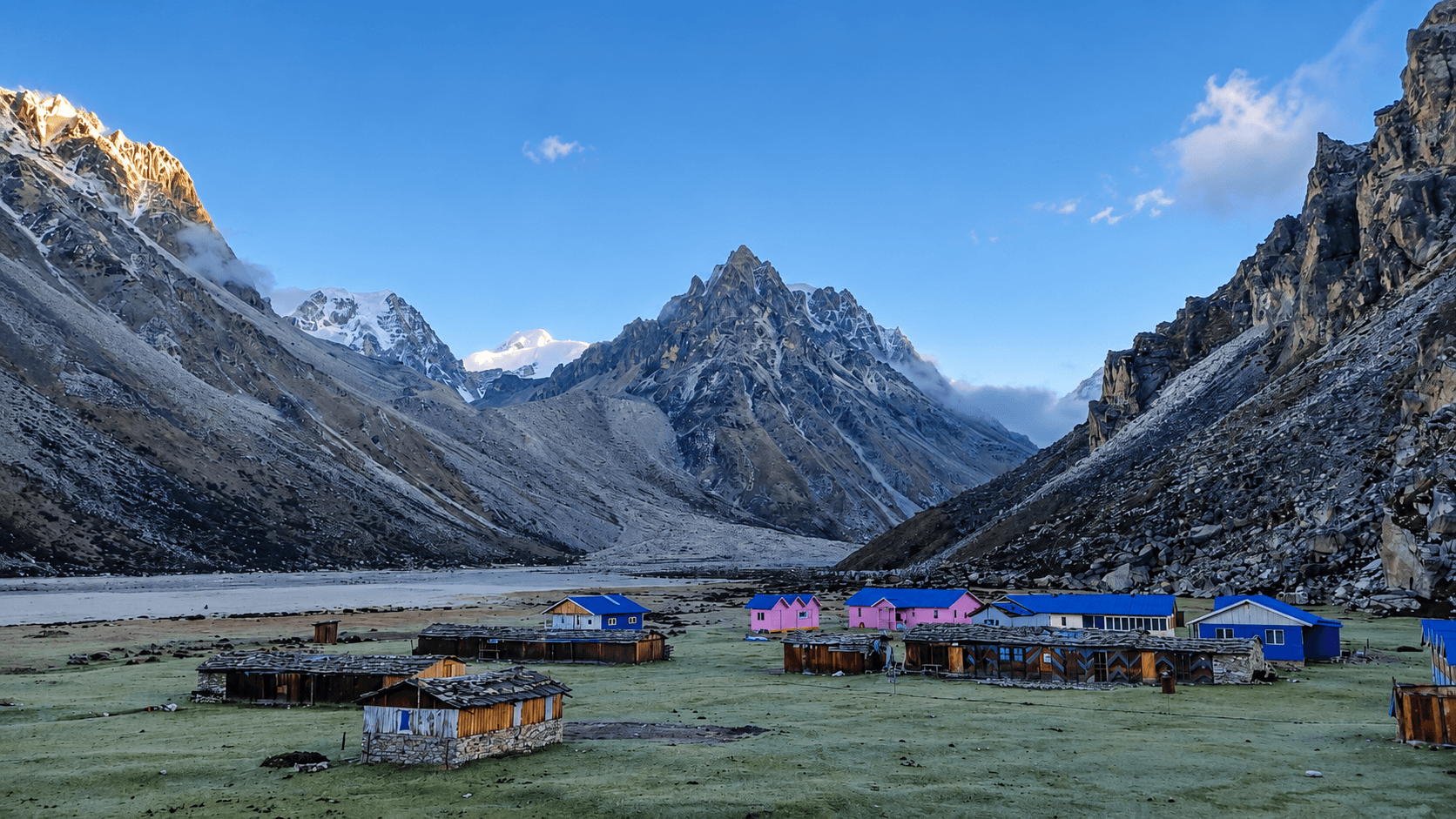 proper rest days, and following your guide's advice significantly improve your chances of completing the trek safely and comfortably.
Beginners Should:
- Build good physical fitness before the trek.
- Train with regular hiking, walking, running, or stair climbing for at least 6–8 weeks before departure.
- Be prepared to walk 5–8 hours per day on varied mountain terrain.
- Trek at a slow and steady pace to reduce the risk of altitude sickness.
- Follow a well-planned itinerary with proper acclimatization days.
- Hire a licensed and experienced trekking guide, as the Kanchenjunga region is a restricted area and requires a registered guide by law.
- Stay hydrated, eat nutritious meals, and listen to your body throughout the trek.
With the right preparation, a positive attitude, and professional support, even beginners can successfully complete the Kanchenjunga Circuit Trek and enjoy one of Nepal's most spectacular and least-visited Himalayan adventures with Asian Adventure Treks & Expedition.
Internet & Mobile Network Coverage on the Kanchenjunga Circuit Trek?
Kanchenjunga Circuit Trek takes you through one of Nepal's most remote Himalayan regions, so internet and mobile phone connectivity are limited and unreliable, especially at higher elevations.
In the lower villages such as Taplejung, Sekathum, and Ghunsa, you may find basic mobile network coverage from Nepal Telecom (NTC), although the signal can be weak.
As you ascend beyond Ghunsa toward Khambachen, Lhonak, Kanchenjunga North Base Camp, and Yalung (South) Base Camp, mobile coverage becomes very limited or disappears completely. Internet access is usually unavailable in these remote areas.
What to Expect
- Mobile network is available only in some lower villages.
- Nepal Telecom (NTC) generally offers better coverage than Ncell in remote mountain regions.
- Wi-Fi is available at a few tea houses in larger villages, usually for an extra charge.
- Little or no internet and phone signal above Ghunsa and near both base camps.
- Electricity for charging devices is available in most villages, but charging may incur an additional fee.
Staying Connected
Since communication is limited, it's a good idea to:
- Inform your family and friends that you may be out of contact for several days.
- Carry a fully charged power bank and spare batteries for your electronic devices.
- If constant communication is essential, consider using a satellite phone or satellite messaging device (provided by Asian Adventure Treks & Expedition) for emergencies.
While the lack of connectivity may seem challenging, it is also one of the highlights of the Kanchenjunga Circuit Trek, allowing you to disconnect from daily life and fully immerse yourself in the pristine beauty and tranquillity of the Himalayas.
Best Time for Kanchenjunga Circuit Trekking
Choosing the right season can make a significant difference to the trekking experience in Nepal. Generally, in Nepal Spring and Autumn are the best season for trekking / peak climbing / expeditions / tour activities.
Also, Kanchenjunga Circuit Trek can be best enjoyed during Spring Season (March - May) and Autumn (September to November), when the weather is stable, the skies are clear, and the mountain views are at their finest.
Describing each season for Kanchenjunga Trekking in Nepal:
- Spring (March - May): Spring is one of the most beautiful times to trek in the Kanchenjunga region. The forests come alive with blooming rhododendrons, magnolias, and other wildflowers, adding vibrant colours to the trails. The weather is generally mild, making long trekking days comfortable, while clear mornings offer spectacular views of Kanchenjunga and the surrounding Himalayan peaks.
- Autumn (September - November): Autumn is considered the peak trekking season in Nepal and is equally ideal for the Kanchenjunga Circuit Trek. After the monsoon rains, the air becomes fresh and dust-free, providing exceptional visibility. Dry trails, comfortable temperatures, and reliable weather make this the preferred season for most trekkers.
- Winter (December - February): Winter trekking is possible for experienced trekkers who are prepared for harsh Himalayan conditions. Higher sections of the trail, including the base camp areas and mountain passes, often receive heavy snowfall, making the trek more demanding. Nights can be extremely cold, and some routes may become temporarily inaccessible.
- Monsoon (June - August): During monsoon frequent rainfall makes the trails muddy and slippery, while landslides can disrupt transportation and trekking routes. Cloud cover also limits mountain views, reducing the overall trekking experience.
Permits Required for Kanchenjunga Circuit Trek
Kanchenjunga region is a restricted trekking area in eastern Nepal, so all foreign trekkers must obtain the necessary permits before starting the trek.
You will need the following permits:
- Kanchenjunga Restricted Area Permit (RAP)
- Kanchenjunga Conservation Area Permit (KCAP)
Restricted Area Permit (RAP) can only be obtained through a government-registered trekking agency in Nepal. Independent trekking is not permitted in the Kanchenjunga region.
According to Nepal's trekking regulations, you must trek with a licensed guide, and the permit must be arranged in advance by your trekking agency.
For a hassle-free trekking experience, Asian Adventure Treks & Expeditions manage all permit formalities, logistics, and guide arrangements before your arrival in Kathmandu / prior to your trekking.
Accommodation During Kanchenjunga Circuit Trek
Accommodation on the Kanchenjunga Trekking is primarily in local tea houses (lodges) / Tea House, which provide basic but comfortable facilities for trekkers. Compared to other popular trekking destinations like Everest, Annapurna, Mustang and Langtang - the lodges here are simpler, offering an authentic experience of life in Nepal's remote Himalayan villages.
Most tea houses provide:
- Simple twin-sharing rooms with basic beds and blankets
- Shared toilets and bathroom facilities
- Freshly prepared local meals
- Limited electricity for charging devices (usually for an additional fee)
- Limited Wi-Fi and mobile network coverage
- Hot showers available in some villages for an extra charge
As you gain altitude, accommodation becomes more basic, and facilities are more limited. Despite the simplicity, the warm hospitality of local families makes the experience memorable and rewarding.
Food During Kanchenjunga Circuit Trek
If you book the trek on a full-board basis, your package generally includes breakfast, lunch, and dinner throughout the trek.
Meals are freshly prepared each day using locally available ingredients and mainly feature Nepali and Tibetan cuisine, along with a limited selection of Western dishes. While tea houses on the northern route usually offer a wider menu, those on the southern route have fewer options. However, you can still enjoy simple dishes such as noodles, fried rice, chowmein, pasta, omelets, pancakes, and soups.
Dal Bhat is the most popular choice among trekkers because it is nutritious, filling, and often comes with free refills in many tea houses.
Book Early During Peak Season for Kanchenjunga Trekking
During the Spring (March–May) and Autumn (September–November) trekking seasons, tea houses can fill up quickly, especially in smaller villages where accommodation is limited.
To enjoy a smooth and hassle-free trekking experience, it is advisable to book your trek with Asian Adventure Treks & Expedition. We are one of the best travel agency in Nepal providing services to clients worldwide since the decade of 2002 A.D. Our experienced team pre-books accommodation whenever possible, arranges all logistics in advance, and ensures your Kanchenjunga adventure is comfortable, well-organized, and truly unforgettable.
Essential items required for Kanchenjunga Circuit Trekking includes:
- Waterproof trekking boots
- Warm down jacket
- Sleeping bag (-15°C or lower)
- Trekking poles
- Thermal clothing
- Waterproof jacket and trousers
- Gloves and warm hat
- Sunglasses
- Sunscreen
- Headlamp
- Personal first aid kit
- Water purification tablets
- Power bank and backup because above Ghunsa only solar power is available.
Packing Tip
Keep your main duffel bag as light as possible—around 10–12 kg if you are hiring a porter. Carry only daily essentials such as water, snacks, extra clothing, rain gear, camera, and personal valuables in your daypack. Packing efficiently will make your Kanchenjunga Circuit Trek more comfortable and enjoyable.
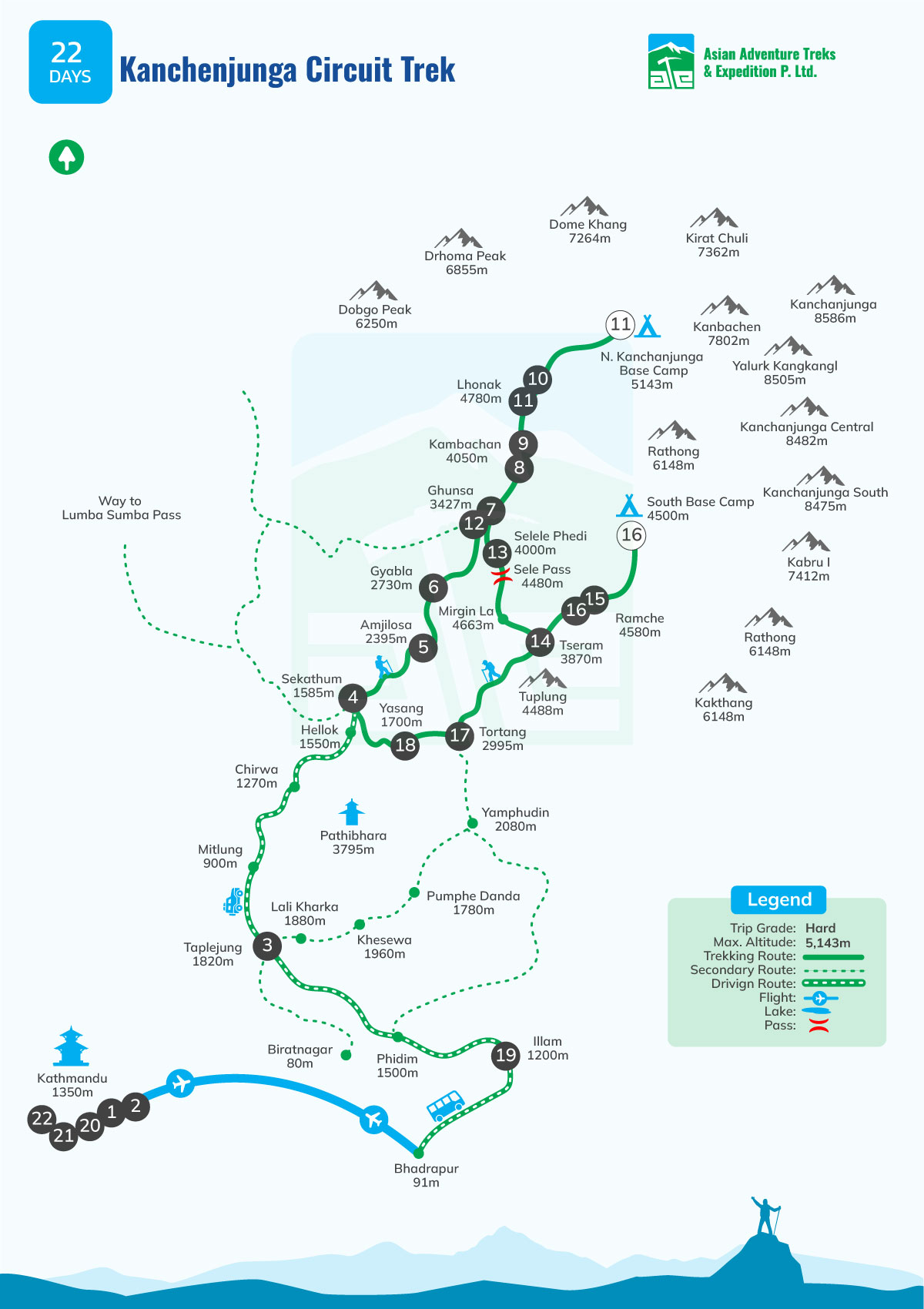
Map of Kanchenjunga Circuit Trekking
Best Trekking agency for Kanchenjunga Trekking in Nepal - Asian Adventure Treks & Expedition
With over 24 years of experience (since 2002 A.D.) , Asian Adventure Treks & Expedition specializes in organizing safe, personalized, and professionally guided trekking adventures across Nepal. Our experienced local guides, carefully planned itineraries, and commitment to responsible tourism ensure you enjoy an unforgettable journey through the remote Kanchenjunga region.
Overall, Kanchenjunga Circuit Trek is one of Nepal's finest wilderness adventures, combining dramatic Himalayan scenery, rich cultural encounters, and the thrill of reaching both the North and South Base Camps of the world's third-highest mountain. While it demands good preparation and endurance, the rewards are extraordinary—quiet trails, untouched landscapes, and an authentic trekking experience that few destinations can match. If you're looking for a challenging, off-the-beaten-path journey, the Kanchenjunga Circuit Trek is an unforgettable choice.